Casey Holland
Chispas Farm
Casey Holland went from a tough rural upbringing into a leadership role in sustainable farming, now empowering new farmers through the Grow the Growers program while honoring their roots in activism and mentorship.
Meet the Farmer!
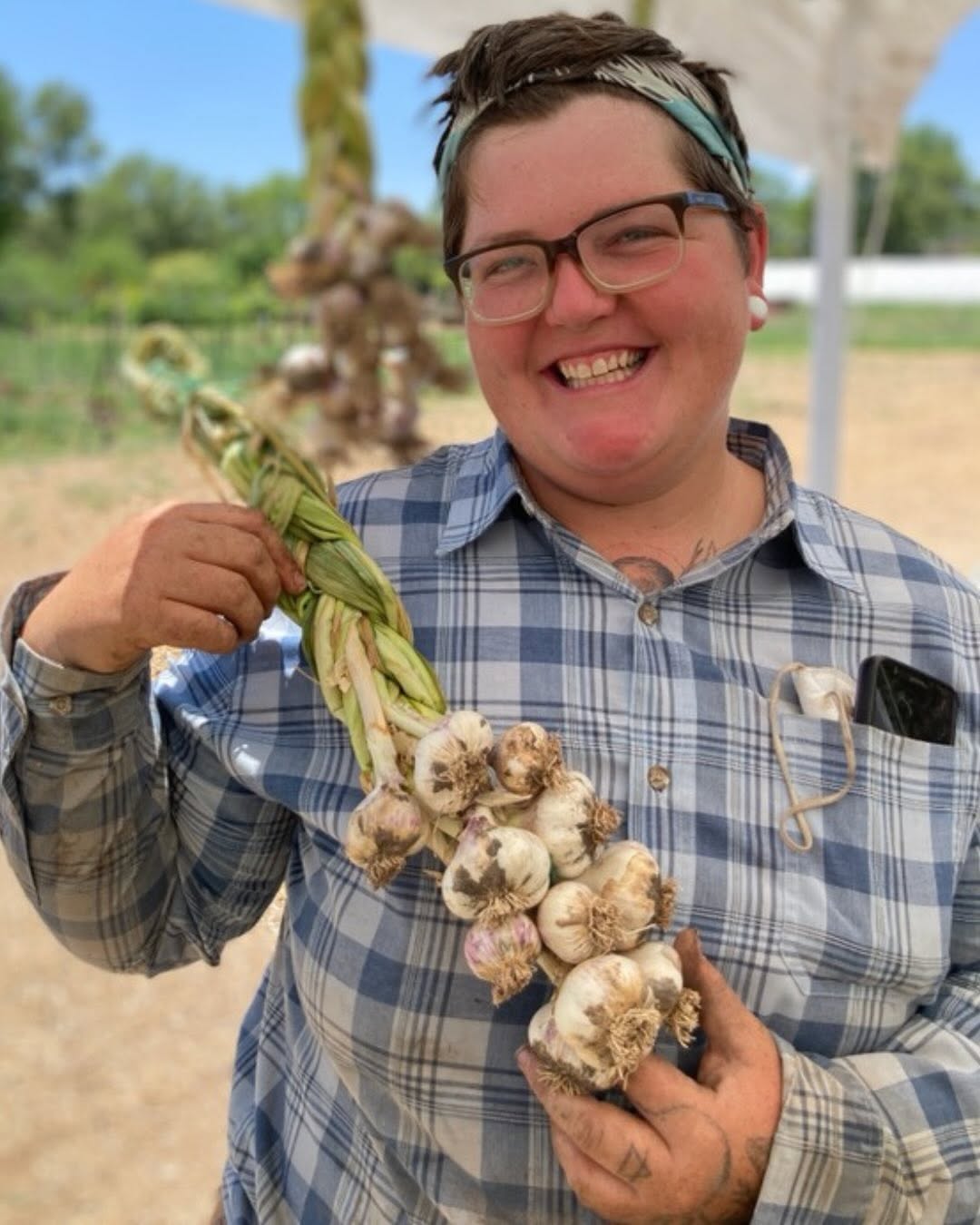
Meet Casey Holland!
Casey Holland is formerly the farmer steward of Chispas Farm in Albuquerque’s South Valley. Born and raised in rural southern New Mexico. Casey’s family had roots in agriculture; their mother’s side owned 50 acres of farmland in Belen, plus a two-acre family vegetable garden. Their grandfather also had a horse, and they remember childhood moments like playing in the hay storage or posing on a Clydesdale.
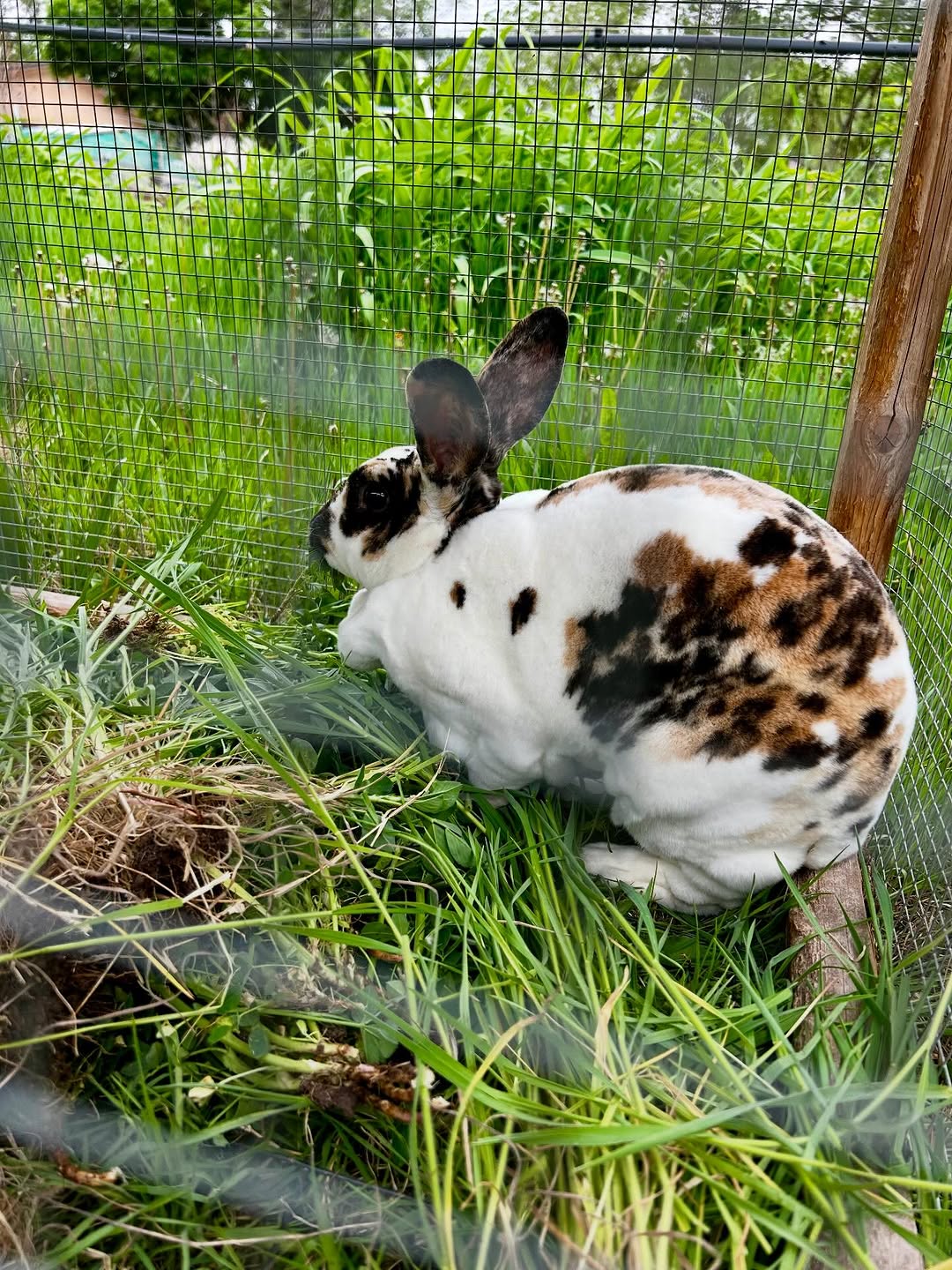
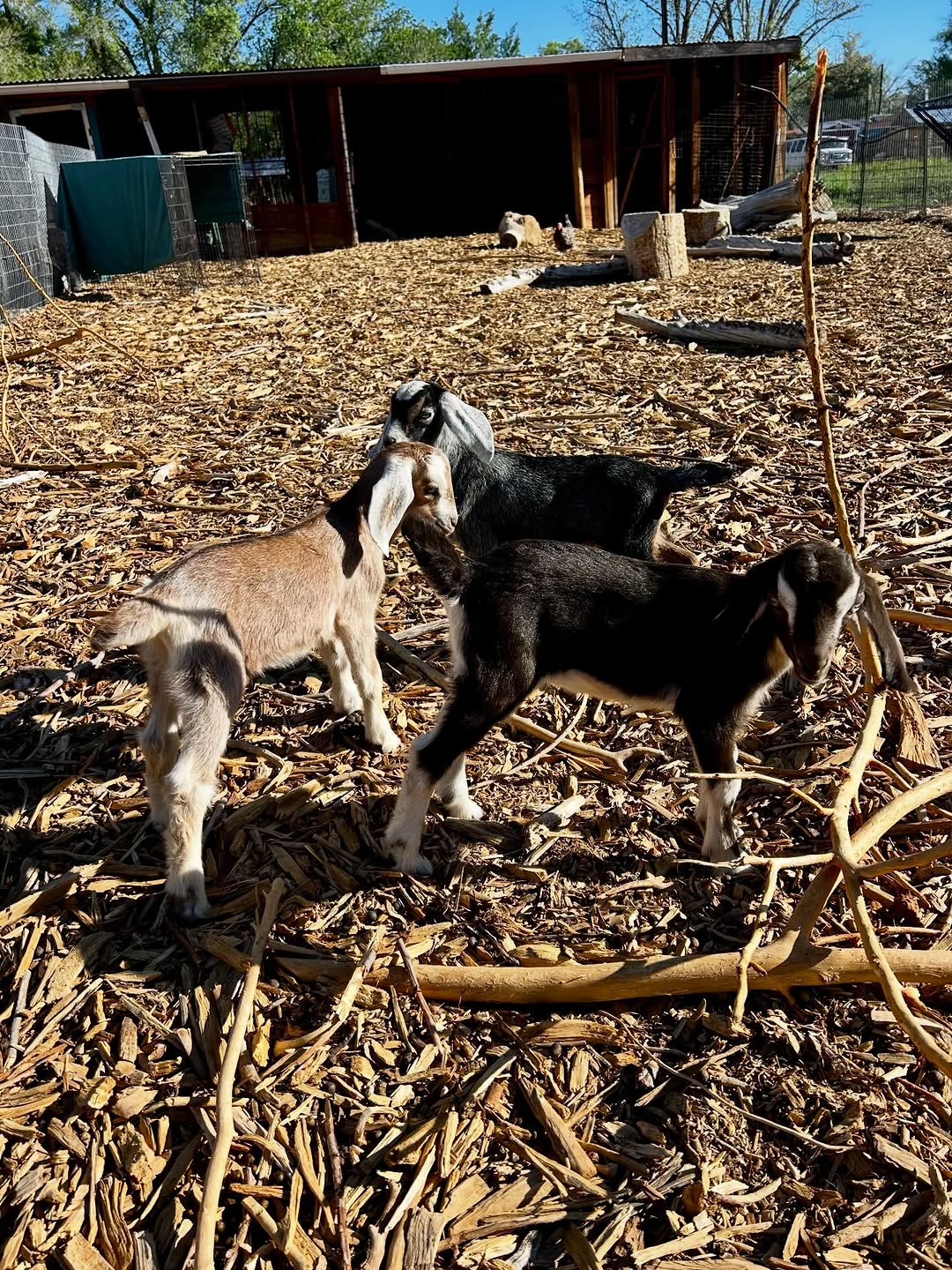
But life at home was far from idyllic. Their mother and much of their family struggled with mental illness, and Casey grew up in an emotionally and physically abusive household. They and their two sisters worked on the farm, sometimes helping to harvest the fields of crops such as onions, pumpkins, and chile. Farming wasn’t a passion, “I hated it,” they admit. “I just wanted to play video games or do something else. I didn’t even care about onions.” The family kept animals, chickens, rabbits, a goose, and a duck for food. They would feed them scraps, would rely on their eggs or their meat, and the animals became a source of comfort. “We had that connection to the animals, but largely, we were box and can kids,” they say.
Time at UNM
At the University of New Mexico, Casey pursued international politics, wanting to change systems from the bottom up. But it was a sociology class that gave them the language to articulate the injustices they’d witnessed throughout their life. They switched majors, looking into power systems, control, and oppression, and embraced anti-capitalist ideals. “I still identify as like an Anarcho-Communist,” they explain. “ [L]earning the truth of what our society is and wanting to do something about it.” Psychology became another passion. “[The] sociology department never really turned us onto psychology,” they say, “But you can’t study groups without knowing about the individual.”
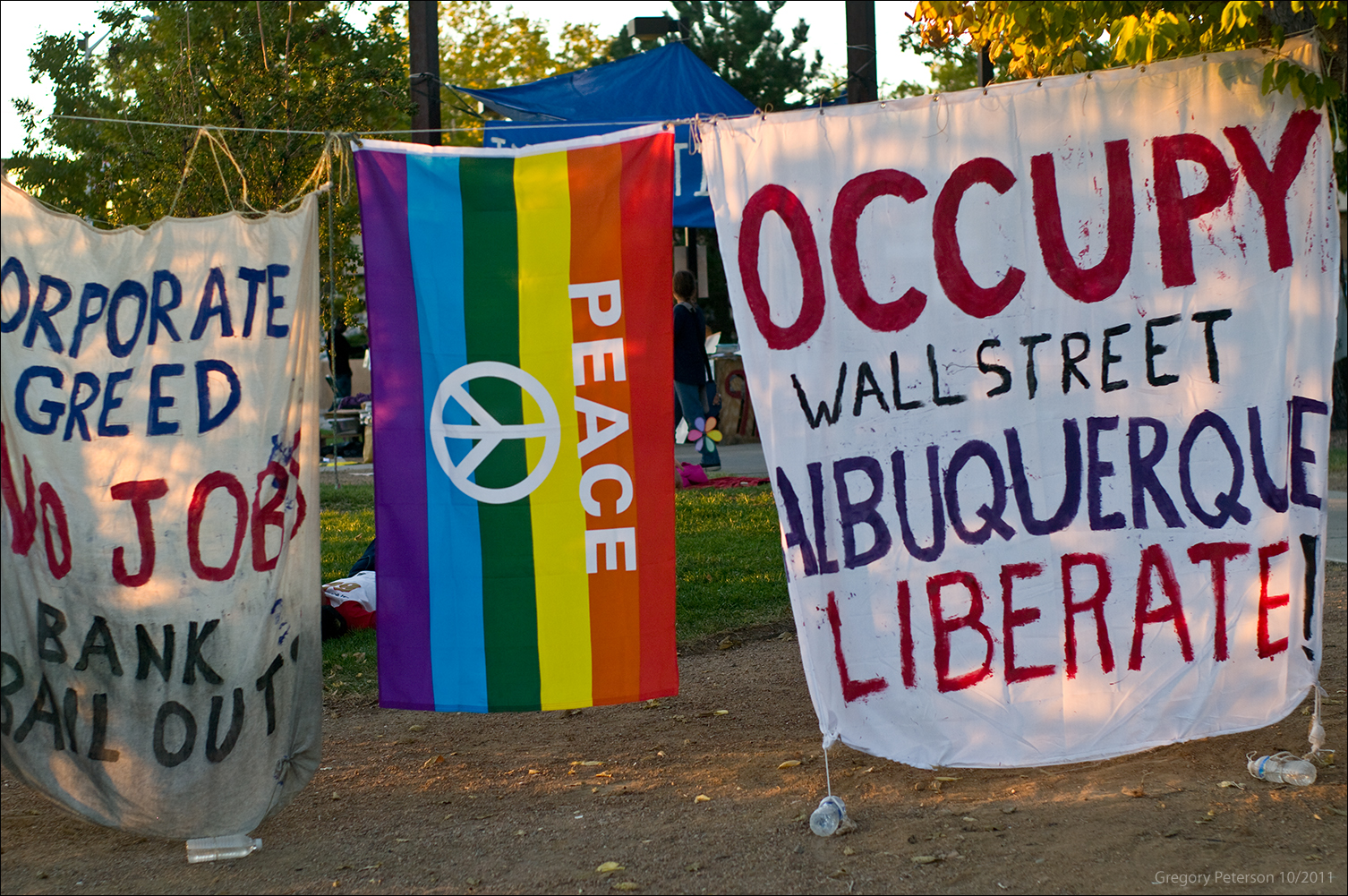
Occupy Wall Street Movement
Photo Taken By Gregory Peterson
By their final year, the Occupy Wall Street movement was happening, and they threw themselves into the camp, connecting with others who spoke the same language of systemic change. It was at Occupy that they first heard Travis McKenzie and Rodrigo Rodriguez of Project Feed the Hood speak at teach-ins. “There was just this language they were speaking of liberation and creation… about the things we could actively do about it on a day-to-day basis that really spoke to me on a deeper level.” So then, in their last semester, they packed their schedule with classes that would change everything. They took macroeconomics, “…to learn the language of the enemy,” they joke, while also enrolling in a sustainability course with Jessica Rowland. As part of their Peace Studies minor, they needed a community internship to graduate. So they reached out to Project Feed the Hood and were accepted.
That semester, taking all those classes and interning with Project Feed the Hood, was transformative. Casey went from being inside all day to realizing this is what they need to do with their life. They explained that they, “[H]ad a summer internship in Chicago, graduate school lined up, a future ahead of me… and I was like, Actually? I’m staying. I’m going to farm.”
The Trails, Tribulations, and Joys of Farmlife
Casey realized they wanted to do something real, impactful, and grounded. “As a young person wanting to affect good in my community, this is literally direct-action community organizing… It’s visceral, real- It’s something real.“ They emphasize the importance of doing that work, making it happen now. With this newfound optimism, they did something they never expected and came back to their roots in farming, focusing on sustainable agriculture
Casey started by farming with Project Feed The Hood, then the American Friends Service Committee, Skarsgard, Farms AmeriCorps Program, Red Tractor Farm, and finally settling at Chispas. Casey accumulated years and years of experience, but not without any hitches.
While working for these farms and programs, they met some important mentors like Dory and Nerissa of Red Tractor Farm. Casey sold at the Downtown farmer’s market for eight years straight. Casey saw Red Tractor Farm as a forever home, under the mentorship of Dory, one of the few queer women working in Ag in Albuquerque. It was inspiring, but Dory fell ill and needed to lease the farm, and Casey couldn’t afford to buy it. Luckily, Casey had found an avenue of opportunity; the owner of the Chispas Farm needed someone to revitalize the land.
An ending, A Beginning
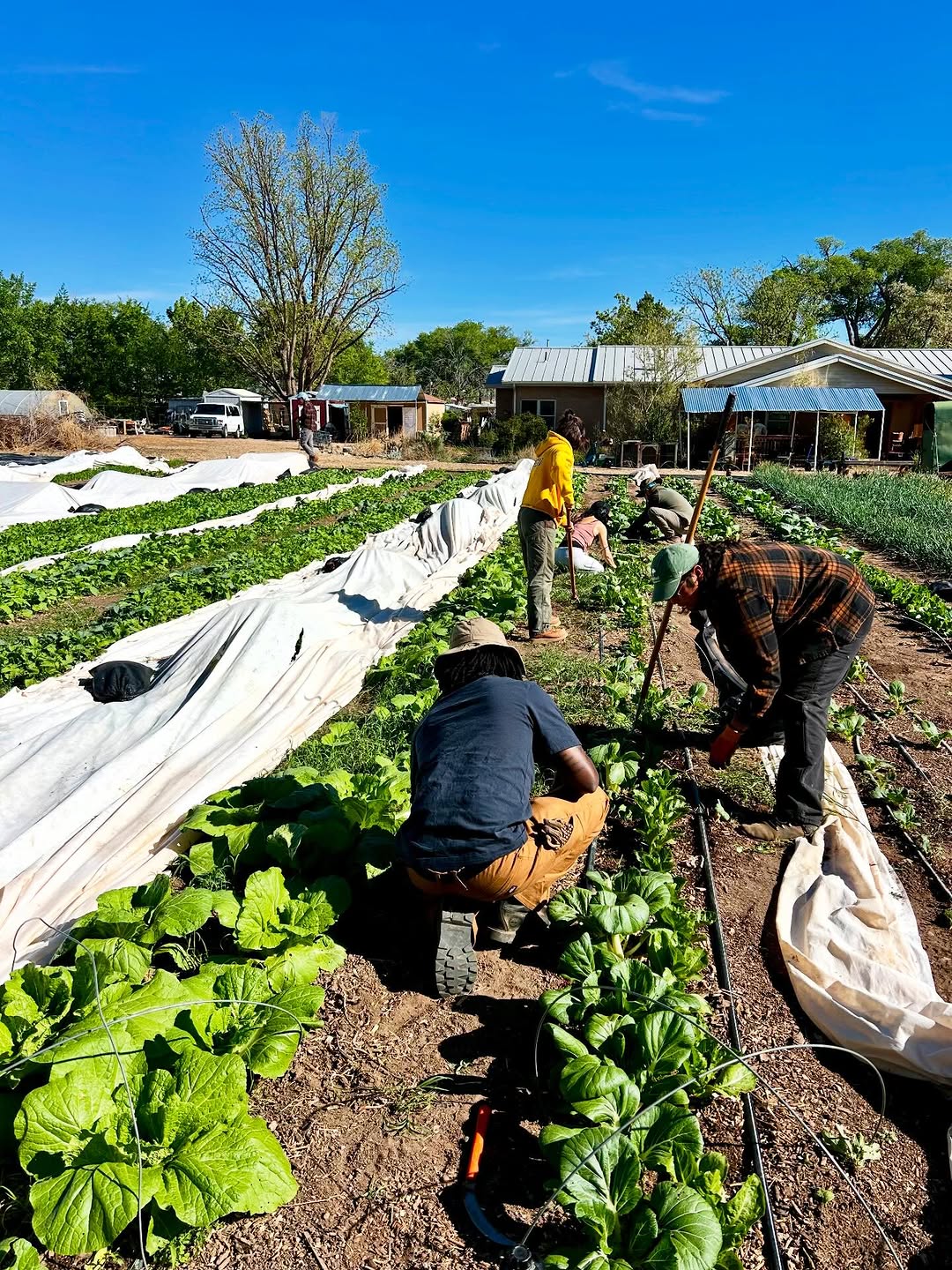
Chispas Farm marked a new beginning for Casey. Casey invited Ian Coulborn from Farm of Song to help them. So they worked to regenerate the land and kept working for 12 years straight with a team of farmers and interns, building their entire community and farm from the ground up, until Casey suddenly realized one day, “I had never actually really taken a break, and that the things I loved about the farm, I actually really hated. Everything was gray, you know, it had lost color… I was having panic and anxiety attacks before going out to lead the crew…” Casey crashed pretty hard from the burnout. Relentlessly working and micromanaging the farm slowly exhausted Casey, and they really needed to sit down and have a conversation with their crew. Casey was responsible for 30 different roles. They were able to delegate all of these different roles to various crew members. And Casey really values all the people they’ve worked with, they exclaim, “I want to know you in 20 years. Even if you’re not on the farm, you’re farm adjacent…you’re part of the community”.
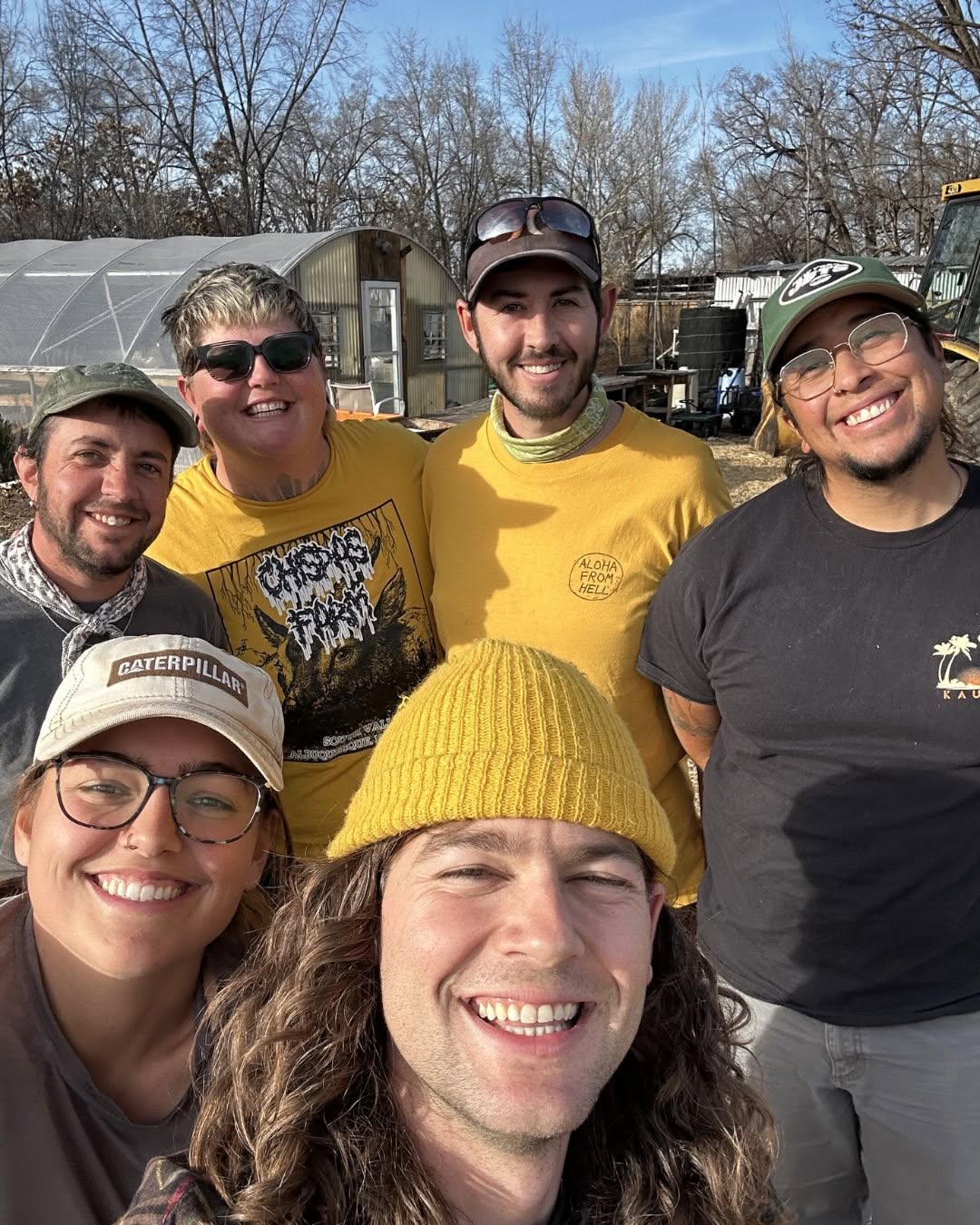
Meet Casey’s Crew
So, although Chispas has been a huge part of Casey’s life and identity, they remark, “I look around and I, we did it. We fucking did it. It’s so beautiful. Yeah. And I’m growing and changing in a way that the space can’t hold anymore”. Casey’s transition has been full of support and reflection. And now they’re moving on to a leadership position for the Ag community within NM. They’re now taking the role of director at the Grow the Growers farmer training program, which really helps new farmers get up on their feet. Now directly being a resource for those beginning to farm. Although Casey is starting anew, they cannot stress how much they value the relationships they’ve made. “This is my community.” Even though moving on, Casey fully intends on supporting those taking over Chispas Farm, and is still planning to come back once a month and work with them. Casey believes in closing loops and opening spirals as a philosophy and states, “… I will still know these people in 20 years. They matter. And how I act now also deeply matters. I want to model that for them, that’s it’s not all screw off, bye, peace, I’m onto the next adventure. I want to live down the road…”
Keep in touch!
Website: chispasfarm.com
Instagram: chispasfarm
Email: chispasfarms@gmail.com
Mini Podcast
Arwen & Eric talk about their thoughts on working on this project
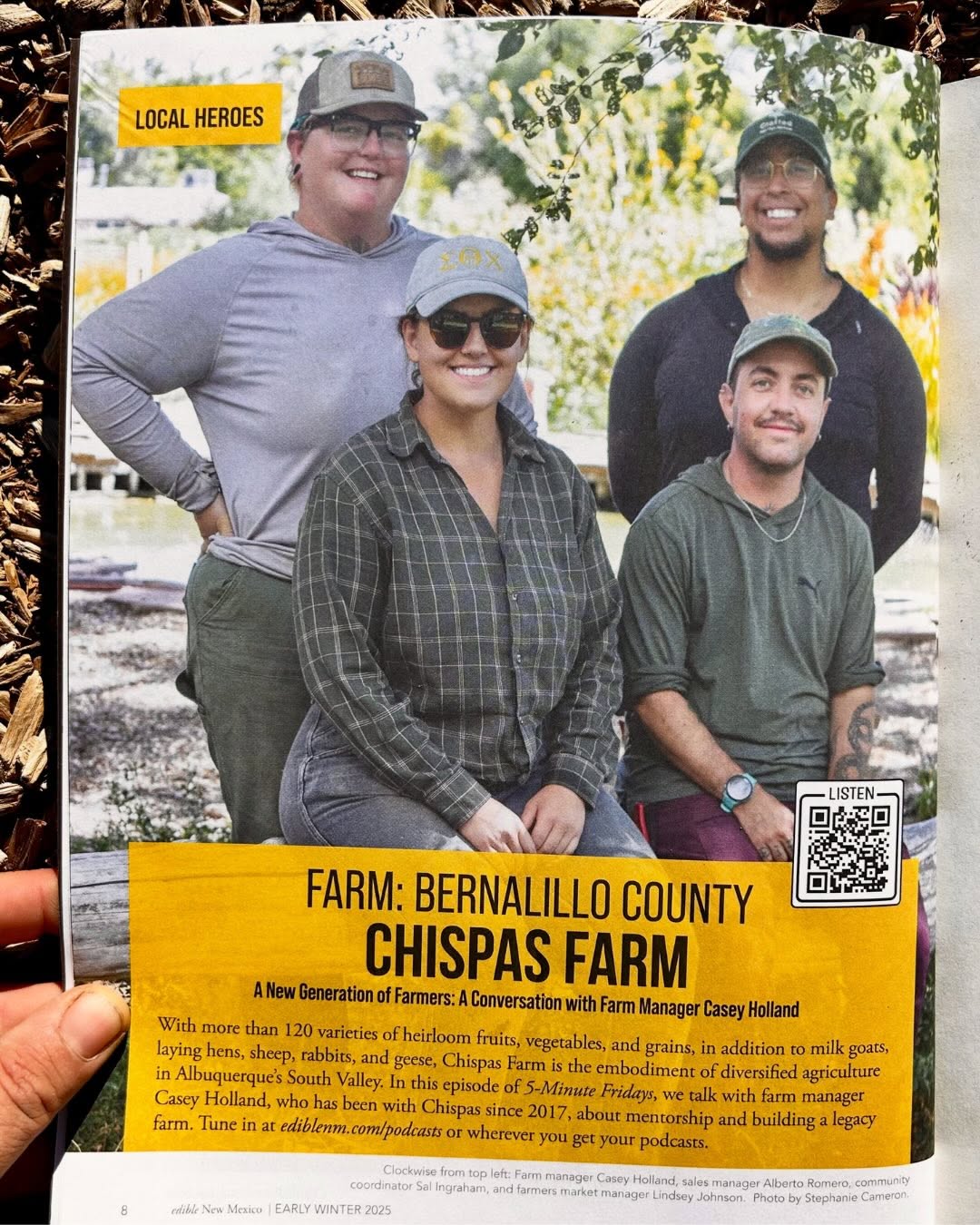
Credits
Narrated by Casey Holland (they/them)
Interviewed by Oliva Kelley, Fall 2025 GEOG-589 Qualitative Methods class
Web Profile by ArwenRose Rocha & Eric Truong, Spring 2026 SUST-364 Local Food Systems Practicum class